When Exterior Damage Must Be Addressed Before Painting
A new exterior coating performs best on a sound, properly prepared surface. Paint can protect a prepared surface, but it cannot correct active moisture, stabilize deteriorated materials or make damaged components sound.
Before work begins, visible and accessible conditions should be separated into painting preparation, limited repair included in writing or a separate solution before painting. Learn more about our exterior painting services.
Why surface condition matters before exterior painting
Loose coatings and damaged materials can keep primer and paint from bonding to a stable surface. Addressing the visible condition first helps define the correct sequence of work and reduces unexpected scope changes after the project starts.
An exterior painting estimate should state which surfaces are included, what preparation is planned and which visible repairs are included or excluded. Appearance alone does not always identify the cause or full extent of a problem.
Visible conditions to review before painting
Loose, peeling, flaking or bubbling paint
Loose or unstable coating needs appropriate preparation before new paint is applied. Preparation may include removing loose material, smoothing appropriate edges and priming exposed areas when included in the written scope.
Repeated peeling or bubbling can have more than one cause. If the visible condition suggests an underlying problem, that issue may require separate evaluation or correction before the affected area is painted.
Failed caulk and open joints
Cracked, separated or missing caulk can leave appropriate exterior joints open around trim, windows, doors and material transitions. The painting scope should identify which joints will be prepared and recaulked.
Caulk does not restore deteriorated material or correct improper installation. Some openings are intended for drainage or ventilation and should not be sealed without first confirming their purpose.
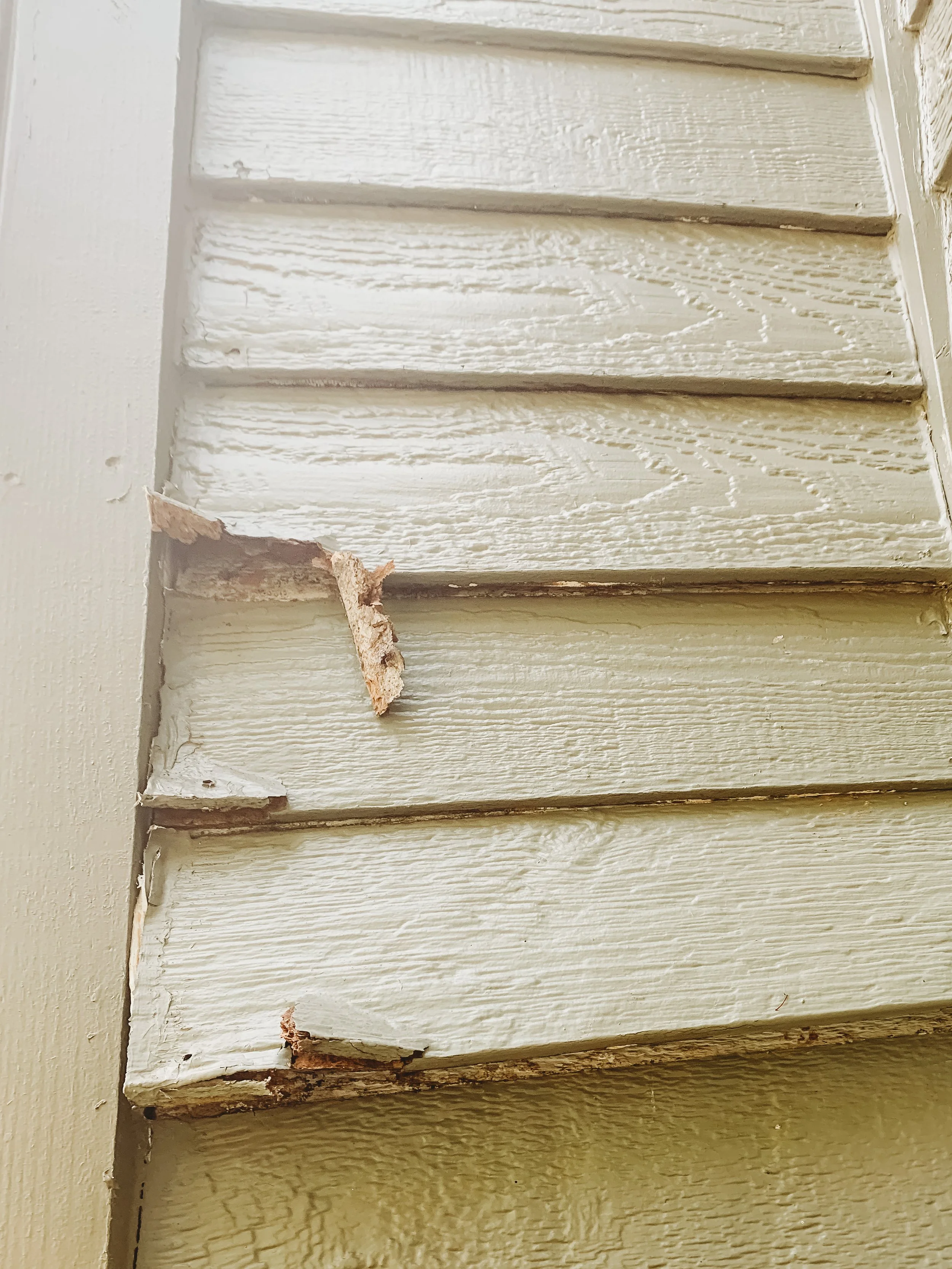
Soft, split, swollen or visibly damaged trim and siding
Damaged trim, siding, soffits or fascia may not provide a reliable surface for paint. Depending on the visible condition, a localized area may need to be secured, repaired or replaced before it is primed and painted.
Soft or crumbling wood can indicate deterioration, but the full extent may not be visible from the surface. Painting over damaged material does not restore it.
Recurring stains or damp-looking areas
Staining, swelling or repeated coating failure can be a warning that the affected surface needs further review. Paint does not correct a roof leak, failed flashing, drainage problem or another active source of water entry.
If an active moisture source is suspected, the appropriate repair may need to be completed before painting proceeds.
Loose or misaligned exterior components
Loose trim, siding or other components should not be treated as a coating problem alone. The condition and attachment may need to be addressed before surface preparation and painting.
Preparation, limited repair or a separate solution?
Painting preparation
Normal preparation may include cleaning, scraping loose coating, sanding appropriate areas, spot priming and caulking specified joints. The exact preparation depends on the surface and must be defined in the written estimate.
Limited repair included in the painting scope
Gripka & Co. may complete localized wood-rot, trim, fascia or siding repairs when they are specifically listed in the approved painting scope. The location, visible condition and planned work should be documented instead of assumed.
A separate solution before painting
Roofing, flashing, drainage, active moisture, pest, structural or broad siding conditions may require evaluation or repair outside the painting scope. Concealed damage can also change what is required after preparation begins.
What the written exterior-painting scope should identify
Before approving the project, confirm that the written scope identifies:
the walls, siding, trim, doors and other surfaces included;
the visible and accessible conditions noted during planning;
the preparation included for each surface;
the exact localized repairs included, if any;
conditions or repairs that are excluded or still need evaluation;
how concealed or newly exposed damage will be handled; and
how added cost or schedule impact will be approved before extra work proceeds.
For an overview of Gripka & Co. painting work, explore all painting services.
What happens when additional damage appears during preparation?
Preparation can expose deterioration that was not visible during the initial walkthrough. The affected condition should be documented and discussed before work proceeds beyond the approved scope.
Any added repair, cost or schedule impact should be agreed upon in writing. Photos can help with early planning, but they do not replace a project-specific review of the visible and accessible conditions.
Exterior damage before painting questions
Can damaged or rotten wood simply be painted over?
No. Paint does not restore soft, crumbling or otherwise deteriorated material. The affected area and any active source contributing to the damage should be evaluated before finishing work proceeds.
Does peeling paint always mean the siding or trim is damaged?
No. Peeling can have several causes, and appearance alone does not confirm material damage. The coating and underlying surface should be reviewed before the preparation scope is set.
Does Gripka & Co. include wood-rot or trim repair with exterior painting?
Only when the specific repair is listed in the approved scope. We may perform localized exterior repairs tied to a painting project, but homeowners should not assume that every repair or concealed condition is included.
What happens if concealed damage is found after work starts?
The condition should be documented and discussed before additional work proceeds. Any added scope, price and schedule impact should be approved in writing.
Can photos confirm the required repair scope?
Photos are helpful for an initial review, but they may not show the complete condition. The final scope should be based on the visible and accessible conditions that can be verified for the project.
Will exterior paint stop a leak?
No. Paint is not a repair for a roof leak, failed flashing, drainage problem or other active water-entry condition. The source may require work by the appropriate trade before the affected surface is painted.
Planning an exterior painting project?
Gripka & Co. provides exterior painting for homeowners across Johnson County and in Basehor. We focus on careful preparation, clearly written scope and respect for the home.
When requesting an estimate, please provide the full project address, the affected areas, your approximate timeline and any helpful photos. We will use that information as a starting point before following up.
“A durable exterior finish starts with a sound surface and a written scope that separates painting preparation from repair work.”